FOR IMMEDIATE RELEASE
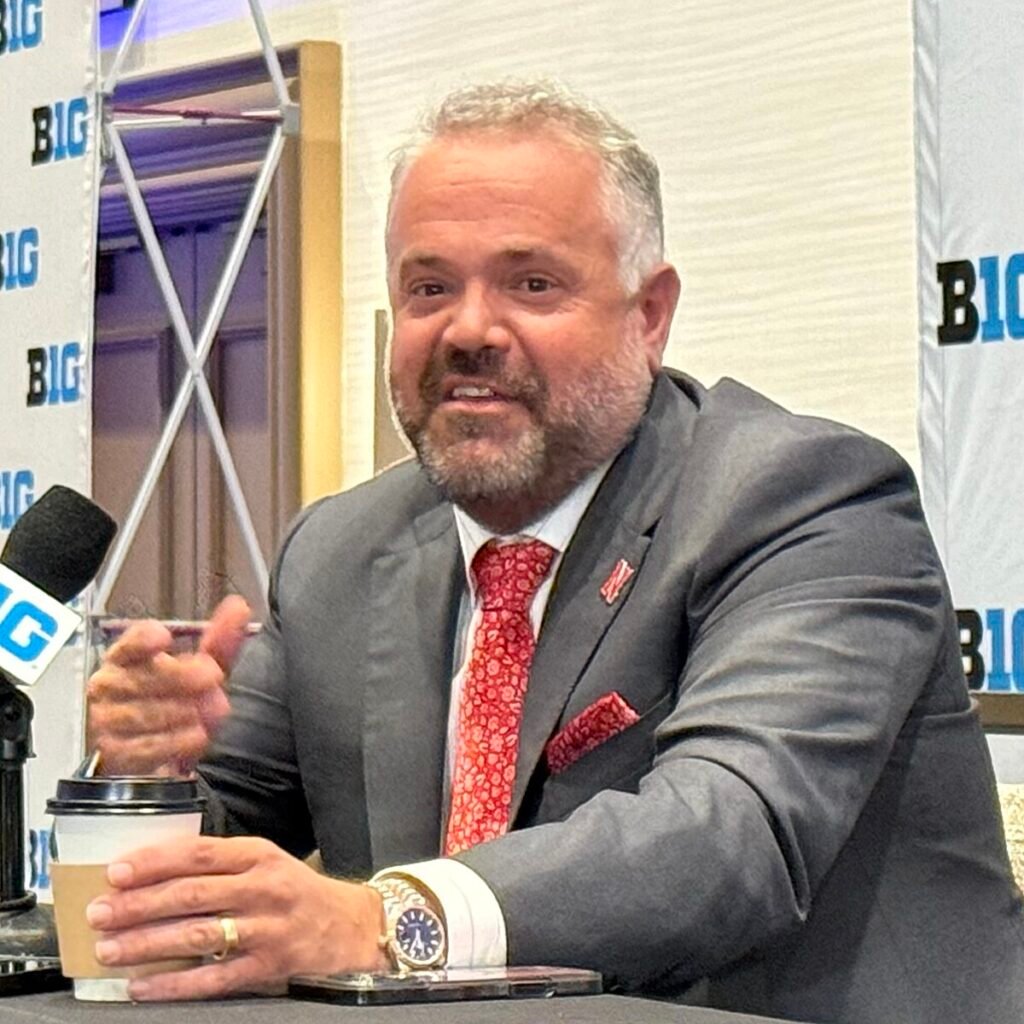
**LINCOLN, Neb.** — In a stunning development that sends shockwaves through the very foundations of Nebraska football, second-year head coach **Matt Rhule** has submitted his letter of resignation to the University of Nebraska athletic department, sources with direct knowledge confirmed late Sunday evening. The abrupt resignation, effective immediately, comes less than 24 months into Rhule’s ambitious rebuild and throws the future of the storied program into immediate and profound uncertainty.
Athletic Director **Trev Alberts** has called an emergency press conference for 11:00 AM CT Monday at Memorial Stadium. The press conference will be streamed live on the Huskers’ official athletic site. No reason for the resignation was cited in the initial, brief communication from Rhule’s representatives.
**A Tenure Ended Before the Vision Blossomed**
Rhule, 49, was hired in November of 2022 with a seven-year, $74 million contract, tasked with one of the most prestigious and challenging rebuilds in modern college football: restoring Nebraska to national relevance. His first season in 2023 was a predictable struggle, finishing 5-7, but was marked by clear cultural shifts, improved physicality, and flashes of competitiveness in close losses. The 2024 season, now just weeks from kickoff, was viewed universally as the critical proving ground, with Rhule’s own recruits beginning to fill the roster.
His sudden departure, before coaching a single game of his second season, defies all conventional logic and suggests a fundamental, irreconcilable break between his vision and the realities of the Nebraska ecosystem.
**Reaction from the Program**
In a terse, three-sentence statement released through his agent, Rhule said: “After deep personal reflection, I have made the difficult decision to step down as head football coach at the University of Nebraska. I want to thank the players for their incredible effort and the fans for their passionate support. I wish nothing but the best for the University moving forward.”
Athletic Director Trev Alberts, in a pre-released excerpt from his Monday remarks, stated: “We thank Matt for his efforts over the last 20 months. We respect his decision and are now wholly focused on supporting our student-athletes and identifying the next leader of Nebraska Football. Our commitment to providing the resources to compete for championships in the Big Ten and nationally remains absolute.”
Players were informed via an emergency team meeting late Sunday night. Senior captain and linebacker **John Bullock** posted on social media shortly after: “In shock. We trust in each other. The brotherhood in that locker room doesn’t change. We have a season to play for. #GBR”
**The Why: A Collision of Vision and Reality**
While Rhule’s statement cites “personal reflection,” multiple sources close to the program paint a picture of a coach increasingly at odds with the infrastructural and philosophical landscape of a modern Power Four program, despite the immense financial support.
Key pressure points are believed to include:
1. **The NIL & Transfer Portal Chasm:** Rhule, a builder known for meticulous, multi-year development of high school recruits, reportedly grew deeply frustrated by the unsustainable financial demands of the transfer portal and the inconsistent, donor-driven nature of Nebraska’s NIL collective, **The 1890 Initiative**. Sources indicate he felt unable to realistically compete for the ready-made, high-priced portal talent required to instantly bridge the gap with Big Ten elites like Ohio State, Oregon, and Michigan.
2. **The “Five-Year Patience” Paradox:** Rhule was hired with an explicit promise of patience for his proven process. However, the intense, statewide yearning for a return to competitiveness—a pressure unique to Nebraska—created an untenable environment where the long-term vision clashed daily with short-term demands from a weary fanbase and influential stakeholders.
3. **Administrative Friction:** While publicly unified, sources suggest growing behind-the-scenes friction with the athletic department over resource allocation, the strategic direction of NIL, and the speed of support staff expansion. Rhule, who wielded near-total control at his previous stops, may have found the complex governance at Nebraska less malleable than anticipated.
**What’s Next for Nebraska: A Program at a Crossroads**
The resignation triggers a complex buyout clause, estimated to be in the range of $60-70 million, the details of which will become a central point of negotiation and public scrutiny.
More urgent is the timing. The Huskers are less than a month from their season opener against UTEP. Trev Alberts is expected to name an interim head coach, likely from the current staff. Defensive coordinator **Tony White**, whose unit showed marked improvement in 2023, and experienced offensive assistant **Bob Wager** are leading internal candidates.
Alberts now faces the most critical hire in Nebraska football history since Tom Osborne retired. The coaching search will be national and must answer existential questions:
* **The Identity Question:** Do they double down on a CEO, culture-building CEO like Rhule, or pivot to an offensive innovator who can win immediately in the expanded Big Ten?
* **The NIL Question:** Can they find a coach willing to embrace the chaotic, high-stakes NIL/portal model, and can the administration finally present a unified, aggressive front on that front?
* **The “Can Nebraska Win?” Question:** Rhule’s resignation, at this moment, will be interpreted nationally as a white flag—an admission that the challenge of winning at a high level in Lincoln in the modern era is insurmountable. Alberts’s hire must shatter that narrative.
**Impact on the Big Ten and the 2024 Season**
The news instantly creates turmoil in the new-look Big Ten. Rivals will see a vulnerable, destabilized Nebraska and likely intensify recruiting efforts targeting current Husker commits and players, who now have a 30-day window to enter the transfer portal without restriction.
For the 2024 roster, built in Rhule’s image, the psychological blow is incalculable. A season already facing a brutal schedule now begins under a cloud of chaos and leadership vacuum.
For the legendary Sea of Red, this is a devastating blow. The hope sold by Rhule’s hiring—the promise of a steady, proven hand leading the long march back—has evaporated overnight. The program is not just back at square one; it is in a deeper, more complex hole, grappling with modern college football’s harsh economic realities in the most public and painful way possible.
Monday’s press conference will not provide closure, but a starting gun for a new, more uncertain race. The search for a leader who can navigate the intersection of Nebraska’s glorious past and college football’s merciless present begins now, under the darkest cloud Memorial Stadium has seen in decades.